Remembering the Wesleyan Library
200 Years after Its Establishment at Hobart Town

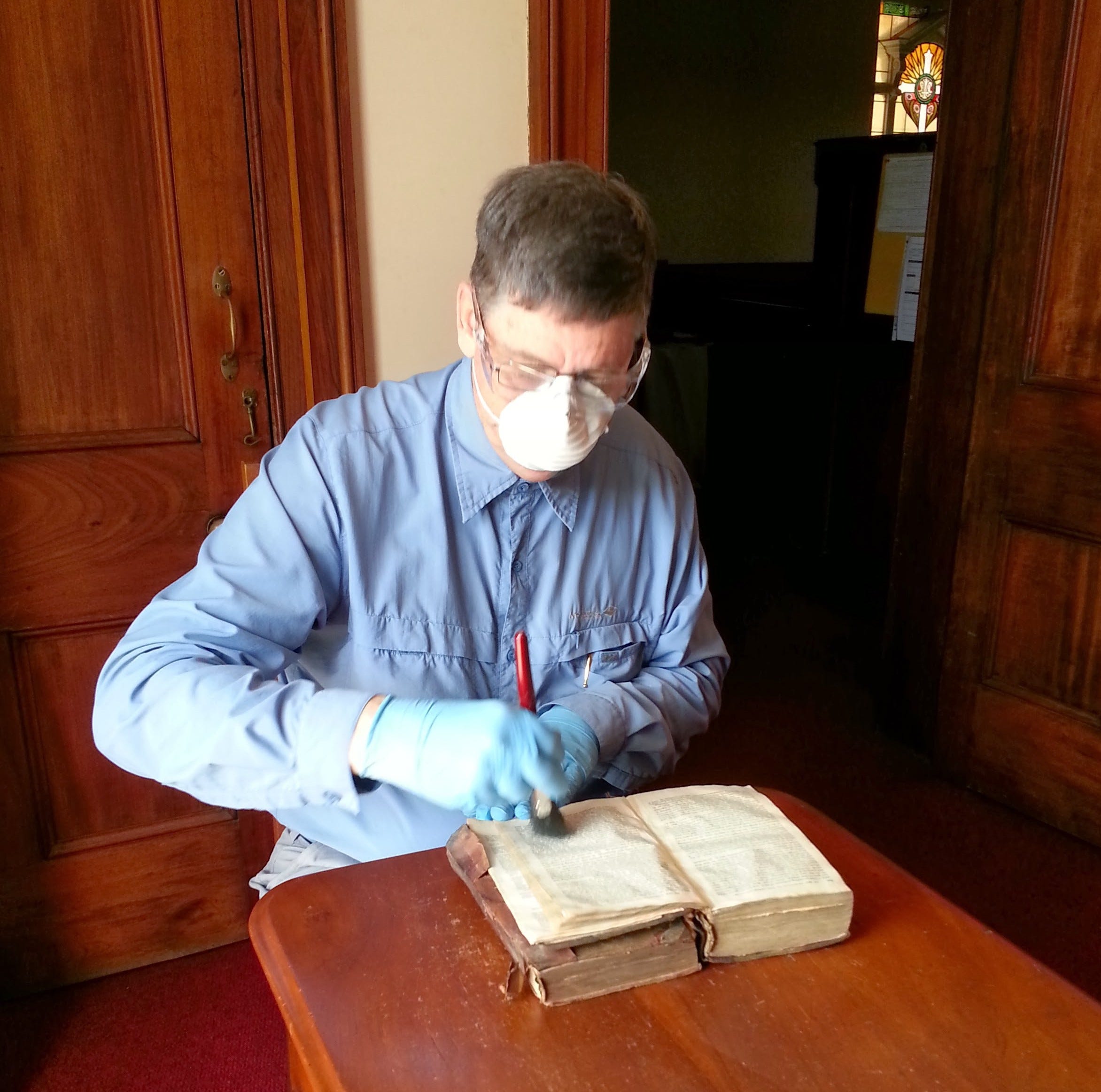
In January 2012 the Wesley Hobart Museum produced a Significance Assessment, researched and authored with the assistance of Colleen Wood and Andrew Wood, and Compiled by Veronica Macno, consultant.
The work was conducted under the 2010 Community Heritage Grants Program funded by the Australian Government through the National Library of Australia, the Department of Prime Minister and Cabinet Office for the Arts, the National Archives of Australia, the National Film and Sound Archive and the National Museum of Australia.
We have extracted the sections in which we described the history of the library - considered by some to have been Australia's first public library - though what a "public library" in 1825 might have looked like was quite different from what we might imagine today!
We have also extracted Veronica's summary statement, which appears towards the end of this article.
Elsewhere, in a short writing exercise entitled, "Deborah", we have imagined what the opening celebration on 19 September 1825 might have been like.
Andrew & Colleen Wood
The Wesleyan Library as a “Collection”
It became necessary, as we explored the context in which the significance of the Wesleyan Library Collection objects held by the Museum was to be assessed, to ask the question: What is a library? Although the answer might seem to be self-evident at first; it was apparent that we needed to frame an answer in terms of both the thing that it was and the functions that it fulfilled.
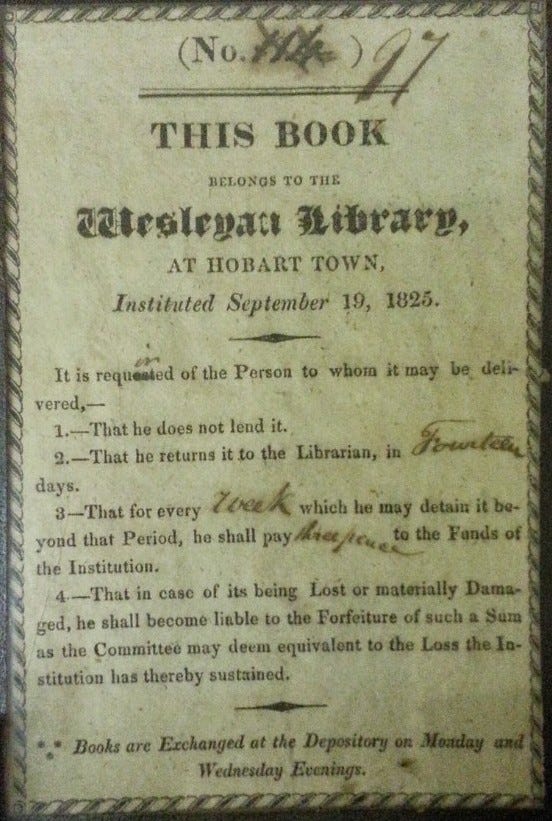
As a thing, we viewed the Wesleyan Library as a collection – i.e., the product of a series of intentional decisions about what was to be collected and what method was to be adopted for organising, maintaining, and making the collection accessible. This appreciation led directly to a further set of questions more related to the function that the Wesleyan Library was to perform. What sort of books were they to be? To what purpose were they to be made accessible; how and to whom?
In the case of the Wesleyan Library, the collection was the product of decisions made over a twenty-year period between 1825 and 1845 founded on a rule[i], given upon establishment, that the library should function by providing:
… a MONUMENT to Rev John Wesley‘s labours in Christian Ministry and a BENEFIT to the public, by facilitating the means of obtaining knowledge of the most useful and important kind.
From that starting point, the collection reflects the judgments and preferences of its subsequent presidents and committees about precisely what titles and method might best fulfil those purposes.
In this context, the Museum's collection, which includes not only the remnant of the books themselves but also the list of titles proposed for acquisition, the debates that took place regarding them and records of the decisions finally made, is significant for its ability to shed light on questions arising within librarianship, theology, church history, and social history scholarship. This appreciation of significance finds support in Ambrose and Paine:
All types of museum collections have a vital role to play in research. Indeed, one of the primary justifications for collecting material for museum collections is that it forms a permanent body of research material for further generations [ii].
Nancy Kalikow Maxwell, in her delightful book Sacred Stacks[iii], draws fascinating parallels between libraries and churches, describing libraries as “sacred, secular institutions” that perform ministerial functions, organize chaos, bestow immortality, uplift individuals and society, provide sacred, secular space, promote community, and transmit culture to future generations.
Kalikow Maxwell sees the parallels between librarianship and ministry as having drawn closer following the significant social changes of the 1950s, which affected relationships between church and society.[iv] However, the role which she describes for libraries appears already to have been evident in the type of public library envisaged and proposed to be established in 1825 as the Wesleyan Library.
Enlightenment Antecedents
The Wesleyan era, spanning almost the entire Eighteenth Century, coincided with the gradual unfolding of the English Enlightenment. Wesleyan thought and practice owes much to the great social movements and innovations of the time. It is precisely during this period that we witness, in 1753, the establishment of the British Museum on the founding ideal that “every citizen should have free access to the sum of human understanding.”[v]
Of the establishment of libraries in this period, Opper[vi] writes:
A defining characteristic of the Enlightenment was the vastly increased output of books and the greatly enlarged reading public. Books and journals became the prime media for scholarly debate and the dissemination of knowledge. At the same time the number of readers reached unprecedented heights and encompassed a much wider social spectrum than ever before….
…More importantly, this period saw a vast increase in the number of private libraries; they now became standard, indeed mandatory, in the houses of nobles and other gentlemen and soon were focal points of social interaction within the house. It was in the libraries, therefore, that important statements about social status or aspirations were made, and both an individual’s and an institution’s place within enlightened society was negotiated.
Wesleyanism was not immune from this influence. In the 1740‘s John Wesley submitted to Blackwell an ambitious scheme for eighty or a hundred volumes “on fine paper and large letter … cast for the purpose; selected, abridged, corrected, where necessary explained, from the most valuable stores of English theology.”[vii]
The Wesleyan societies, as befitting ambitious institutions of the time, also felt the need to expand their libraries, complaining to the Methodist Conference of 1770 that “the societies are not half-supplied with books; not even with Kempis, Instructions for Children and Primitive Physick, which ought to be in every house.”[viii]
Andrews has written that “[e]very Methodist preacher was expected to act as a book agent, and subscriptions were collected in order to establish local libraries for general use.”[ix]
Rev Benjamin Carvosso – More than a Side Note
There is a danger in attributing any significant public undertaking to the work of one person. But, in the course of our research for this Significance Assessment, we could not help but remark upon the efforts of one man but for whose vision and mutinous return to Hobart in 1825 against the express instructions of the British Committee, the Wesleyan Library might never have been established; or might have been established in Sydney.
Benjamin Carvosso was born on 29th September 1789 at Gluvian, Cornwall, England of a fishing and farming family with connexions to the Methodist Movement of the time. His father, William Carvosso was a local preacher and class leader.
Largely self-educated and inspired by his mother‘s love of reading, he developed a great appreciation for the written word. His ministry in Australia was characterised by several ambitious publication projects. Whilst in Sydney, 1820 -1825 he collaborated with Robert Howe, the Government Printer, and Rev Ralph Mansfield[x] in founding The Australian Magazine: or Compendium of Religious, Literary and Miscellaneous Intelligence, which was the first publication of its type in Australia. The first number was issued in May 1821. The publication was short lived, ceasing in 1822 when the British Committee prohibited the expenditure.
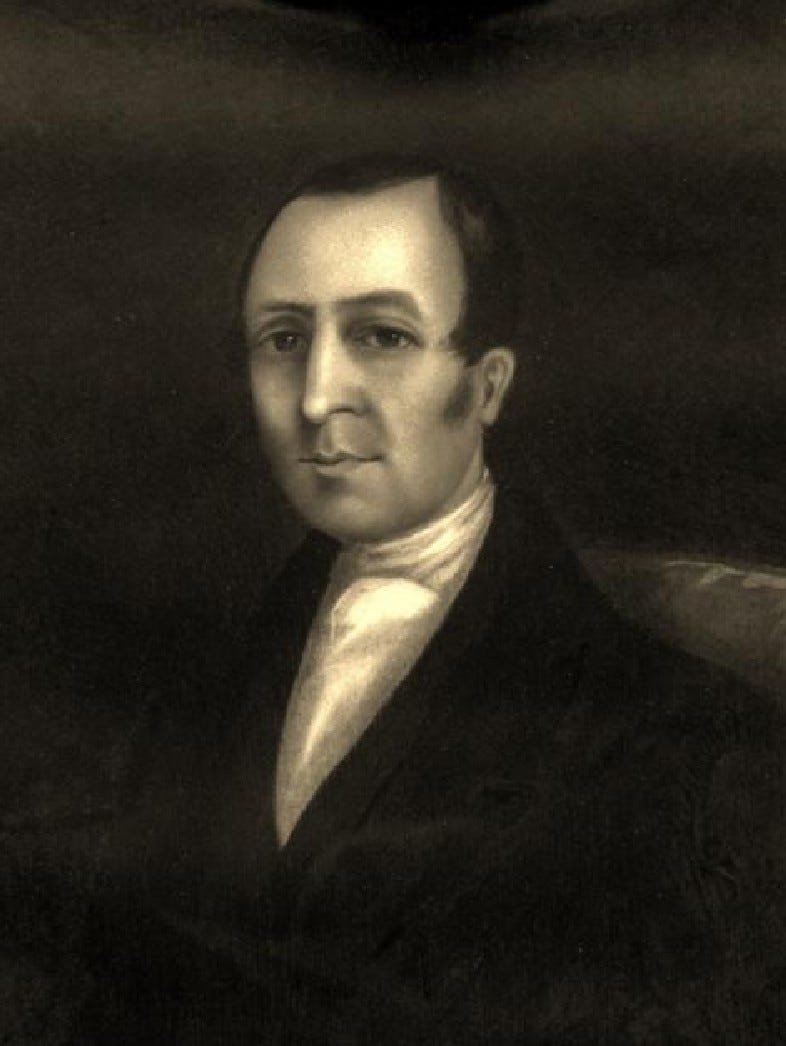
Carvosso, returning to Hobart in 1825, embarked upon the venture of establishing a library with an enthusiasm that saw it accumulate debts that were not paid out until 1843[xi]- being censured himself because of it; but going ahead regardless and meeting his critics with “pained surprise”[xii].
Carvosso‘s pioneering spirit, his sometimes rebellious readiness to lay out expense in a worthy cause, his tireless dedication to his ministry and his great generosity in providing for the fledgling library from his own funds and resources are elements of a tale in themselves[xiii]. As such, the significance of the Wesley Hobart Museum‘s Wesleyan Library Collection lies partly in its associations with this remarkable man.
Vital Piety and Learning – the Two Long Separated
It might be remarked that the antagonism between faith and reason; between religious and scientific doctrine that so sharply divided the populace and threatened, for a while, to tear the Church apart from the scientific community following the publication of Charles Darwin‘s Origin of the Species in 1859, had not reached its climax in the mid-1820s.
Wesley himself, whilst positioning scripture in the place of primary importance in the obtaining of knowledge, emphasised and insisted on the importance of additional sources – reason, experience, and tradition[xiv] in hope of reuniting “vital piety” and learning. His interests ranged widely through medicine, electricity, and natural history.[xv]
This, then, is the context in which Carvosso brings his proposal for the establishment of a public library to Hobart in 1825, writing:
Science will be regarded, but it will be regarded only as the handmaid of religion. It is designed, that every interest of rational man shall be strictly attended to, in the order which is naturally suggested to the Christian mind, by their various degrees of importance. The Institution will be formed on the most general principles; but to perceive this, man must be surveyed comprehensively – the whole of his existence must be taken into the account. [xvi]
The Library is Founded
The first meeting of the Wesleyan Library was conducted on the centenary of John Wesley's ordination on 19 September 1825, where:
It was resolved that a public library should be founded as a monument of the day the man whose invaluable services to the human race had occasioned the day to be observed…[xvii]
In 1825, the Reverend Benjamin Carvosso donated fifty of his own books and the collected sum of £50 (£20 of it advanced from his own purse). Carvosso wrote of its establishment:
Among the various means by which knowledge is obtained, reading is doubtless one of the greatest importance. But so remotely are we situated from the land of books, and so few are possessed of competent libraries, that except within a confined circle, a taste for general reading cannot be gratified by the intellect nor cultivated by the young. It is proposed that the Wesleyan Library shall contribute its quota to supply the desiratum…[xviii]
There is evidence that the library was representative of a type of public library developed with a lending, standing, and circulating collection to be used to support the life and work of the Church and to preserve its participation within the Methodist Connexion in Australia (Van Diemens‘ Land) and Great Britain. The evidence is in the minutes of its operations, the rules of its establishment, and in the content of the collection itself which was assembled according to Carvosso‘s Rule that the books:
…are to be of general utility; but while on the one hand History, Philosophy, and general Science are duly regarded; on the other hand Publications that are either frivolous in their composition or pernicious in their tendency will be entirely excluded, and Books on Morality and Religion form the prominent feature of the Institution.[xix]
The Rules and Regulations for the Wesleyan Library outlined in detail the three classes of: Lending Library, Standing Library and Circulating Library:
The LENDING LIBRARY is to consist entirely of Books on the plainest and most important subjects of doctrinal and practical Religion; which shall be furnished gratuitously to any who may be disposed to apply for them; provided the Librarian [Rev. Benjamin Carvosso] shall be satisfied that the Books so lent are likely to be taken proper care of. The STANDING LIBRARY is to be composed only of Books of reference, and scarce and valuable works. From this Class no Book shall be taken out of the Depository without a special vote of the Committee. The CIRCULATING LIBRARY, comprising the main body of the Books belonging to the Institution shall be for the free use of the Subscribers, subject to the Regulations resembling those commonly observed in reading Societies.
The Minutes of the Wesleyan Library Committee noted in their 25 September 1827 meeting that the library could be referred to as a “public Christian library.”[xx]
But should sanguine hopes prove abortive the originators will have the consolation not only of knowing that they did what they could in promoting a great and good undertaking; but that they were the first either in this or the sister colony who made anything like a successful attempt to form a public library…on condition that it and the lending branch be opened to all other subscribers.[xxi]
The establishment of the Wesleyan Library in September 1825 is discussed in detail in the 1826 publication printed by Andrew Bent in Hobart Town:
The importance of establishing a Public Library in this town is so very obvious, that the subject needs only be mentioned, to gain it the most general approbation…But a capacity for the acquirement of knowledge is equally the birth-right of every individual…[xxii]
In terms of the types of books:
Science will be regarded, but it will be regarded only as the handmaid of religion. It is designed, that every interest of rational man shall be strictly attended to, in the order which is naturally suggested to the Christian mind…[xxiii]
The Wesleyan Library owes its establishment to the members and friends of the Wesleyan Body and therefore the name of the Library was based on those who initiated its introduction and the “…founder of the Wesleyan Connexion.”[xxiv]
The Rules and Regulations for the Wesleyan Library state that the object of the formation of the Wesleyan Library as being two-fold:
…first to raise a characteristic MONUMENT, expressive of our grateful Remembrance of the late Rev. John Wesley’s useful labours in the Christian Ministry; and secondly, to BENEFIT THE PUBLIC by facilitating the Means of obtaining Knowledge of the most useful and important kind.
For the 1828 report from the Wesleyan Library Committee, it was noted that the total number of volumes in the library was 390 and that:
Gibbon's History of the Decline and Fall of the Roman Empire was not admitted without some hesitation...it was thought by the committee that the decline and fall of the roman empire might be both safely and advantageously added to the Wesleyan Library.[xxv]
By 1842 the Wesleyan Library Committee observed a neglect of some activities with the Library and there was a public meeting which reported:
It would appear that for want of men whose zeal would allow them to sacrifice a little time to the institution the Wesleyan Library has been lying dormant for some lengthened period until very recently when a few individuals interested themselves in the matter … the people had not taken the thing up as heartily as we could have wished. Nevertheless we are in a state of progression.
In November 1843, the Wesleyan Library reported that it was out of debt, a circumstance that had occurred for the first time since the formation of the institution.
It was noted in the Wesleyan Library Committee Minutes of 11 November 1844 that:
…there are now 4 other public libraries in this city therefore we cannot wonder of this receiving less support than heretofore the fact of so many valuable books remaining unused from year to year is lamentable. The number of books issued during the past year is but small being 81. Income has been £5/10/6.[xxvi]
The last entry for the Wesleyan Library was recorded on 25th August 1845:
...remove books to the small vestry...
It can be concluded that after this date the Wesleyan Library ceased and that some part of the collection of books was handed over to the Sunday School library.[xxvii]
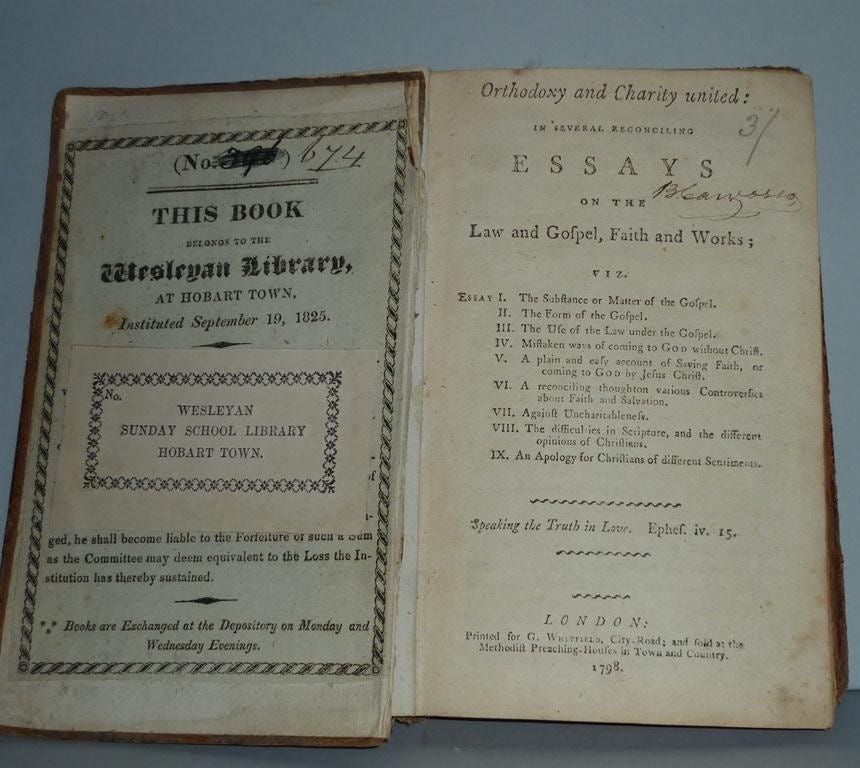
Evidence to support this can be found in those books from the Wesleyan Library that have had their original bookplates covered over with the Wesleyan Sunday School Library Hobart Town bookplate.
Summary statement of significance:
The Wesleyan Library Collection forms part of the Wesley Hobart Museum‘s collection and is of local, state, and national significance. The Wesleyan Library Collection contains the remains of what is reputedly the first public library in Australia and consists of over 100 printed books with a date range from c.1778 to 1845, a bookplate and a Minute Book of the Wesleyan Library Committee.
The Wesleyan Library was formed by a committee, led by the Reverend Benjamin Carvosso, from its first meeting on19 September 1825. He donated 50 of his own books. The Reverend Benjamin Carvosso was the first Methodist minister in Hobart and served from 1825 to 1830.
The remains of the Wesleyan Library Collection are provenanced to the Reverend Benjamin Carvosso, his signature appears on a number of the volumes, the 1826 printed catalogue and the Minute Book of the Wesleyan Library Committee which documents the entire period of the Library‘s history.
The 1826 catalogue details the rules and regulations for the library and the education and benefit to the public purpose of the library, and a catalogue of 196 books under subject headings of: theological, biographical, historical, and miscellaneous. The remaining books in the Wesleyan Library Collection are from the theological and miscellaneous subject categories. In particular the almost complete set, except one volume, of sixteen bound volumes, dating from 1793 to 1819, titled, Evangelical Magazine as noted in the 1826 catalogue is an important part of the Wesleyan Library Collection.
The Minute Book for the Wesleyan Library states that at the time, 1825, “…they were the first either in this or the sister colony who made anything like a successful attempt to form a public library…on condition that it and the lending branch be opened to all other subscribers.”
In 1830 The Hobart Town Almanac listed the Wesleyan Library under the heading Public Libraries, indicating that the Wesleyan Library was considered as a public library as the phrase was understood at the time.
The Wesleyan Library Collection is particularly significant to the Wesley Hobart Museum and the congregation of the Uniting Church in Tasmania for its link to the Reverend Benjamin Carvosso.
Endnotes
[i] 1826, Rule II, Object.
[ii] Ambrose, T and Paine C, Museum Basics 2nd edition, Routledge, Abingdon, 2006, p.159.
[iii] Kalikow Maxwell, N, Sacred Stacks: The Higher Purpose of Libraries and Librarianship, American Library Association, Chicago, 2006.
[iv] Kindle eBook, location 306 of 2067.
[v] MacGregor, N Preface to Sloan K & Burnett A, eds, 2003 and Enlightenment: Discovering the World of the Eighteenth Century, The British Museum Press, London, 2003.
[vi] Opper, T, ―Ancient glory and modern learning: the sculpture-decorated library Ch. 5 in Sloan K & Burnett A, eds, 2003, Enlightenment: Discovering the World of the Eighteenth Century, The British Museum Press, London, 2003, p.58
[vii] Andrews S Methodism and Society: History Insights Humanities Kindle eBook location 921 of 1677.
[viii] ibid location 921 of 1677.
[ix] Ibid., location 934 of 1677.
[x] Rev Mansfield was a Methodist Minister who served in Sydney and Windsor, NSW 1820-1824 and Hobart 1824-25.
[xi] Minutes November 1843.
[xii] Australian Dictionary of Biography, http://adb.anu.edu.au/biography/carvosso-benjamin-1883 accessed 28/1/12
[xiii] Blencowe, G, The Faithful Pastor: A Memoir of Rev Benjamin Carvosso Forty years a Wesleyan Minister and One of the First Wesleyan Missionaries to Australia and Van Diemen’s Land, J Gladding, London, 1857.
[xiv] Scripture, Reason, Experience and Tradition are referred to in later Wesleyan scholarship as the “Wesleyan Quadrilateral”, attributed to Outler, A, John Wesley Oxford University Press, New York, 1964.
[xv] Andrews (2007 934/1677)
[xvi] Carvosso, B., Observations of the Establishment of the Wesleyan Library at Hobart Town, Van Diemen’s Land with the Rules and Regulations; a list of the books collected: and an Appendix containing some account of Mr Wesley, and the striking success which attended his Ministry, printed by Andrew Bent, Hobart Town, 1826.
[xvii] Wesleyan Library Minutes, 19/9/1825.
[xviii] Wesley Hobart Museum‘s Community Heritage Grants 2010 application, p.4.
[xix] Wesley Hobart Museum‘s Community Heritage Grants 2010 application, p.5.
[xx] Wesleyan Library Minutes, 25/9/1827.
[xxi] Wesleyan Library Minutes, 25/9/1827.
[xxii] Observations of the Establishment of the Wesleyan Library at Hobart Town, Van Diemen’s Land with the Rules and Regulations; a list of the books collected: and an Appendix containing some account of Mr Wesley, and the striking success which attended his Ministry, printed by Andrew Bent, Hobart Town, 1826, p.3.
[xxiii] Ibid.
[xxiv] Ibid., pp.4-5
[xxv] Wesleyan Library Minutes, 1828.
[xxvi] At the rate of 10 shillings per subscription there would appear at this time to have been no more than 11 subscribers together with whatever number of members had subscribed for life.
[xxvii] A Sunday school was established from the beginnings of Methodism being establishing in Tasmania. It has been generally accepted that the Wesleyan Sunday School, Melville Street commenced on 13 May 1821, which had originally started in Collins Street and then moved to Argyle Street. As there were no books available in Hobart Town, Mr Nokes made an application to Sydney. A collection of hymn books, spelling books and catechisms were sent.
SELECT BIBLIOGRAPHY
http://catalogue.statelibrary.tas.gov.au/item/?id=NG1234 http://www.linc.tas.gov.au/global/aboutlinc/information/collections/heritage/vande
http://search.slv.vic.gov.au/primo_library/libweb/action/search.do?dscnt=2&frbg=&ta b=default_tab&dstmp=1323862787981&srt=rank&ct=search&mode=Basic&dum=tru e&indx=1&fromLogin=true&vl(freeText0)=launceston+mechanics+institute&vid=MAI N&fn=search
http://www.sl.nsw.gov.au/about/collections/rare_books/index.html
http://adb.anu.edu.au/biography/carvosso-benjamin-1883
Adkins, Keith, Reading in Colonial Tasmania: The Early Years of the Evandale Subscription Library, The Ancora Press, Monash University, 2010.
Alexander, Alison (Editor), The Companion to Tasmanian History, Ross, Lynette, Isle of the Dead, Centre for Tasmanian Historical Studies, University of Tasmania, Hobart, 2005.
Ambrose, T and Paine C, Museum Basics 2nd edition, Routledge, Abingdon, 2006.
Andrews, Stuart, Methodism and Society: History Insights Humanities, eBooks, 2007.
Blencowe, G, The Faithful Pastor: A Memoir of Rev Benjamin Carvosso Forty years a Wesleyan Minister and One of the First Wesleyan Missionaries to Australia and Van Diemen’s Land, J Gladding, London, 1857.
Bos, R, Theology for Pilgrims, Uniting Church Press, Sydney, 2008. Carvosso, Benjamin, Rev., Journal of 28 April, 1820.
Carvosso, B, Observations of the Establishment of the Wesleyan Library at Hobart Town, Van Diemens Land with the Rules and Regulations; a list of the books collected: and an Appendix containing some account of Mr Wesley, and the striking success which attended his Ministry, printed by Andrew Bent, Hobart Town, 1826.
Community Heritage Grants 2010 Application for the Uniting Church in Australia, Wesley Hobart Congregation, Museum, 2010.
Duggan C.C., A Century of Tasmanian Methodism 1820-1920, Tasmanian Methodist Assembly, Hobart, n.d.
Durrant, Patricia, “Australia‘s First Public Library,” The Australian Library Journal, August, 1971.
Kalikow Maxwell, N, Sacred Stacks: The Higher Purpose of Libraries and Librarianship, American Library Association, Chicago, 2006.
McGrath, A., Christian Theology: An Introduction, 4th ed Blackwell Publishing, Oxford, 2007.
Minutes of the Trustees Meeting, 1925-1928.
Mission statement, from the Collection Policy from the Wesley Hobart Museum, May 2008.
National Library of Australia, Proforma, Community Heritage Grant information, 2010.
Notes authored by the Wesley Hobart Museum, 2011.
Opper, T. Ancient glory and modern learning: the sculpture-decorated library, pp58- 67 in Sloan, K & Burnett, A (eds) Enlightenment Discovering The World In The Eighteenth Century. The British Museum Press. London, 2003.
Petrow, Stefan, ‗Mechanics Institutes‘ in The Companion to Tasmanian History, Centre for Tasmanian Historical Studies , Alexander, Alison (Editor),University of Tasmania, Hobart, 2005.
Prettyman, R.D. A Chronicle of Methodism in Van Diemen’s Land 1820-1840, Aldersgate Press, Melbourne, 1970.
Russell, Roslyn and Winkworth, Kylie, ‗Why Significance?‟, Significance 2.0: A Guide to assessing the significance of collections, Collections Council Australia, 2nd Edition, 2009.
Sloan, K & Burnett, A (eds) Enlightenment Discovering The World In The Eighteenth Century. The British Museum Press. London, 2003.
Stansall, Max, Alive to the Great Work, Wesley Church Hobart, 1999.
Taylor, G.T, The Circuit History in “The Hobart Circuit Tasmania” in The Methodist History of Victoria and Tasmania, Vol 1 1899, reprinted from the Spectator Special issues Nos 1-12 1898-99
Wesley in-the-city Uniting Church Hobart Museum and Heritage Committee Terms of Reference, n.d.
Wesleyan Library Minutes, 1825-1845.
Wilson, Elisabeth, “The Methodist Movement” in The Companion to Tasmanian History, Centre for Tasmanian Historical Studies Alexander, Alison (Editor), University of Tasmania, Hobart, 2005.